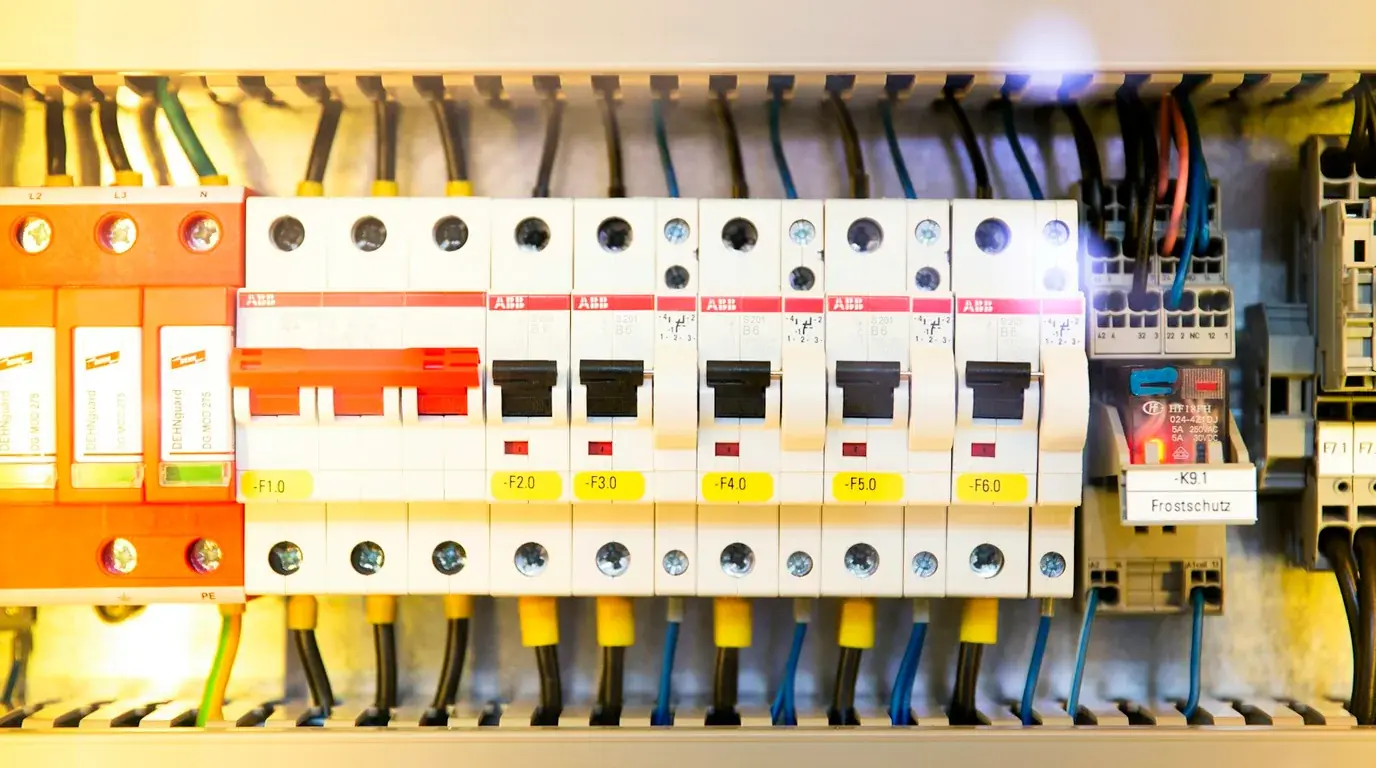
Buzzing breaker panels, intermittent receptacle power, or scorched outlet faces signal hazardous arcing that demands urgent professional diagnosis in Virginia. Over years of seasonal temperature swings and heavy heating or cooling cycles, mechanical wire splices expand, contract, and vibrate loose from terminal screws. Resolving loose connections eliminates dangerous electrical arcing, restores continuous power flow, and protects your entire property from wiring failures.
Modernizing obsolete electrical panels or cloth-insulated branch circuits delivers immediate safety advantages for residential and commercial structures in Virginia. Outdated fuse boxes and split-bus panels manufactured by brands like Federal Pacific or Zinsco fail to disconnect power during direct short circuits. Installing modern distribution panels equipped with whole-home surge protective devices shields sensitive microprocessors in appliances from destructive grid transients and lightning surges.
Electrical repair protocols across Virginia prioritize complete homeowner protection, including dedicated appliance circuits, code-mandated ground fault protection, and robust physical grounding rods driven into earth. Upfront itemized estimates and thorough voltage drop testing ensure property owners receive dependable, uninterrupted electrical service backed by rigorous diagnostic workmanship.
Statewide Electrical Repair & Troubleshooting Services in Virginia
Electrical Panel Upgrade & Replacement: Comprehensive main breaker panel upgrades, 100-amp to 200-amp service modernization, whole-home surge protection, and obsolete fuse box replacements.
Emergency Electrical Repair Services: Urgent diagnostic troubleshooting and repairs for sparking outlets, burning electrical odors, tripped main breakers, and sudden power outages.
Circuit Breaker & Wiring Repair: Targeted troubleshooting and repairs for tripping circuit breakers, deteriorated branch wiring, aluminum wire remediation, and dead receptacles.
EV Charger Installation Services: Safe, code-compliant Level 2 electric vehicle charger installation, dedicated 240-volt branch circuits, NEMA 14-50 outlets, and hardwired charging stations.
Lighting & Outlet Installation Services: Complete interior and exterior lighting installation, recessed LED retrofits, code-compliant GFCI/AFCI safety outlets, and ceiling fan wiring.
Commercial Electrical Services: Complete commercial electrical troubleshooting, three-phase power distribution, dedicated equipment lines, lighting retrofits, and code safety inspections.
Diagnostic & Repair Workflow
Upgrading your electrical infrastructure involves a systematic diagnostic process designed to minimize household disruption across Virginia. The electrical specialist evaluates connected appliance demand, measures line-to-line voltage, and inspects attic or crawlspace junction boxes to pinpoint the root cause of flickering lights or dead outlets.
On service day, the electrical crew disconnects obsolete or damaged wiring, runs new dedicated copper branch circuits where needed, and mounts modern AFCI/GFCI breakers into the panelboard. After testing each circuit under full operational load and verifying earth ground continuity, technicians review the completed work with you.
Equipment diagnostics & breaker replacements for leading electrical manufacturers across Virginia:
"Dead receptacles across two adjoining bedrooms baffled me because no breaker appeared tripped in the garage panel. The technician tested the circuit with an inductive toner, uncovered a failed push-in backstab connection in an upstream outlet, and pigtailed the run securely with lineman twists."
"Persistent flickering throughout our kitchen recessed lighting got progressively worse whenever the refrigerator compressor kicked on. A diagnostic check isolated severe voltage drop to a loose service entrance lug inside our meter enclosure, which was repaired safely before heat damaged the bus."
"Adding a dedicated 100-amp subpanel to our detached woodworking shop allowed us to run dust collection and table saws simultaneously without dimming house lights. The installer trenched PVC conduit below the frost line, pulled four individual copper conductors, and isolated the floating subpanel neutral."
Electrical Repair Service Areas in Virginia
Experienced electrical specialists provide code-compliant wiring repair to communities throughout Virginia:
Landscape lighting transformers step 120-volt line power down to 12 or 15 volts, but exceeding the transformer's total wattage rating or running undersized low-voltage cable causes severe voltage drop and excessive heat. Buried landscape cable nicked by garden spades or corroded direct-burial splice connectors can also introduce moisture-induced ground faults. Technicians calculate total fixture wattage, adjust secondary tap voltages to compensate for cable length, and install waterproof silicone-filled wire nuts to protect outdoor circuits.
Retrofitting two-wire circuits without running new cable through finished walls is permitted by installing GFCI receptacles at the first outlet position on the circuit. While a GFCI does not provide an equipment ground for surge protectors, it detects ground leakage current and trips instantly to prevent lethal electrical shock. Every downstream three-prong outlet fed from that GFCI must display an indelible sticker reading "GFCI Protected" and "No Equipment Ground" to remain fully compliant with regional electrical safety inspections.
Residential branch circuits are daisy-chained from one junction box to the next, meaning power flows through multiple outlets sequentially. A loose wire nut or a failed push-in backstab connection in an upstream outlet breaks the electrical path for every downstream receptacle on that line. The circuit breaker stays closed because no high-amperage short circuit occurred—only an open circuit. Technicians trace the run using circuit toners and multimeters, opening each box along the circuit path to repair broken splices with solid lineman twists and secure wire connectors.
Panels manufactured between the 1950s and 1980s by companies such as Federal Pacific Electric (FPE Stab-Lok) and Zinsco have documented failure rates where breakers refuse to trip during severe overcurrent faults. Un-tripped breakers allow branch conductors to overheat inside structural wall cavities without cutting power. Warning signs include scorched breaker casings, melted busbar fingers, or breakers that feel loose on the rail. During an inspection in Virginia, technicians remove the panel dead-front cover to inspect for busbar pitting, metal discoloration, and unbonded neutral bars before recommending a modern panel replacement.
High-draw stationary appliances demand dedicated branch circuits to prevent nuisance tripping and protect distribution wiring from thermal overload. Code mandates individual dedicated circuits for electric ranges (50-amp), central air conditioners, electric clothes dryers (30-amp), electric vehicle chargers, heat pump compressors, microwaves, dishwashers, and food waste disposers. Sharing these appliance circuits with general lighting or living room wall receptacles causes chronic breaker tripping and risks conductor degradation inside enclosed framing cavities across homes in Virginia.
Schedule Electrical Repair in VA
Contact our electrical dispatch desk to review circuit troubleshooting options or schedule an on-site diagnostic estimate.
Restore Safe, Reliable Electrical Power in Virginia
Aging breaker panels and loose wire terminations create severe fire hazards if left unaddressed. Connect with our technical dispatch desk for expert diagnostic assistance and transparent, itemized repair estimates.