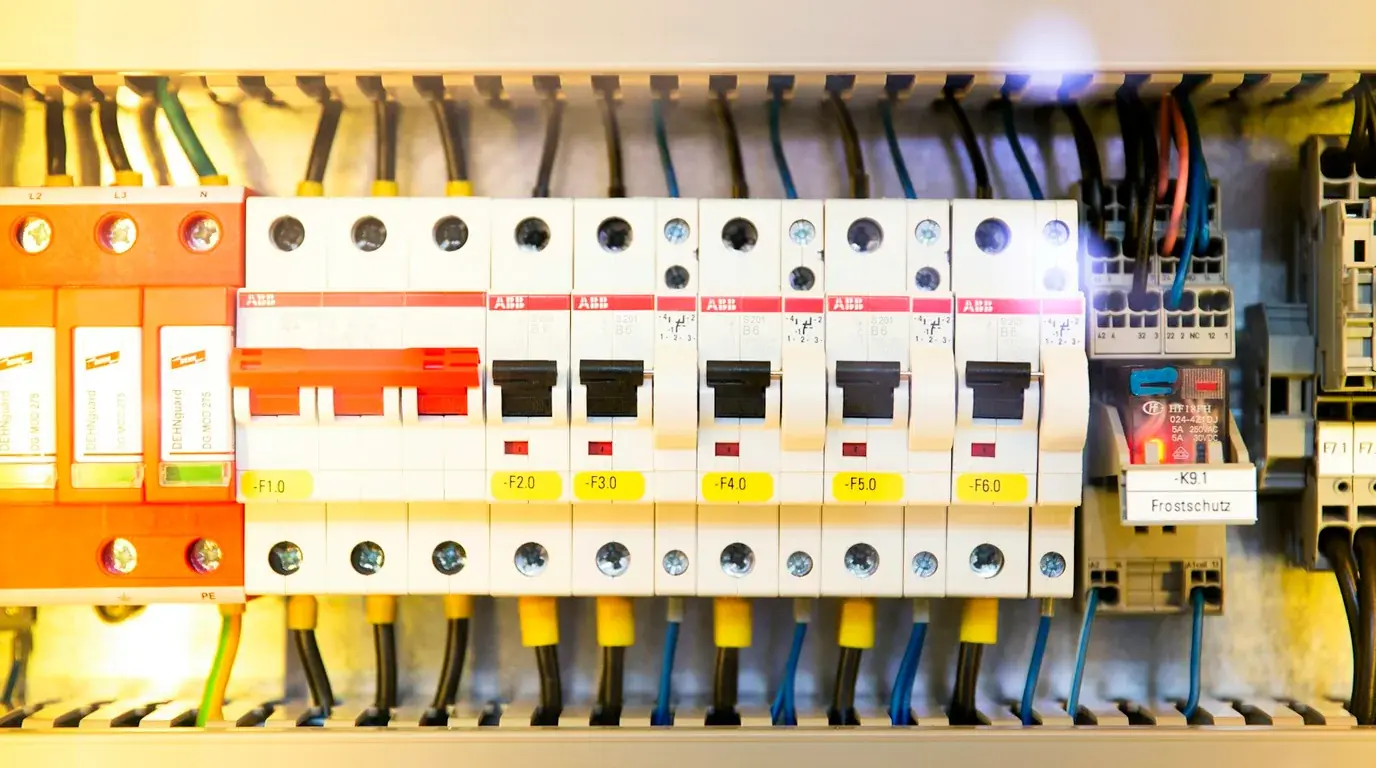
Buzzing breaker panels, intermittent receptacle power, or scorched outlet faces signal hazardous arcing that demands urgent professional diagnosis in Georgia. Over years of seasonal temperature swings and heavy heating or cooling cycles, mechanical wire splices expand, contract, and vibrate loose from terminal screws. Resolving loose connections eliminates dangerous electrical arcing, restores continuous power flow, and protects your entire property from wiring failures.
Modernizing obsolete electrical panels or cloth-insulated branch circuits delivers immediate safety advantages for residential and commercial structures in Georgia. Outdated fuse boxes and split-bus panels manufactured by brands like Federal Pacific or Zinsco fail to disconnect power during direct short circuits. Installing modern distribution panels equipped with whole-home surge protective devices shields sensitive microprocessors in appliances from destructive grid transients and lightning surges.
Electrical repair protocols across Georgia prioritize complete homeowner protection, including dedicated appliance circuits, code-mandated ground fault protection, and robust physical grounding rods driven into earth. Upfront itemized estimates and thorough voltage drop testing ensure property owners receive dependable, uninterrupted electrical service backed by rigorous diagnostic workmanship.
Statewide Electrical Repair & Troubleshooting Services in Georgia
Electrical Panel Upgrade & Replacement: Comprehensive main breaker panel upgrades, 100-amp to 200-amp service modernization, whole-home surge protection, and obsolete fuse box replacements.
Emergency Electrical Repair Services: Urgent diagnostic troubleshooting and repairs for sparking outlets, burning electrical odors, tripped main breakers, and sudden power outages.
Circuit Breaker & Wiring Repair: Targeted troubleshooting and repairs for tripping circuit breakers, deteriorated branch wiring, aluminum wire remediation, and dead receptacles.
EV Charger Installation Services: Safe, code-compliant Level 2 electric vehicle charger installation, dedicated 240-volt branch circuits, NEMA 14-50 outlets, and hardwired charging stations.
Lighting & Outlet Installation Services: Complete interior and exterior lighting installation, recessed LED retrofits, code-compliant GFCI/AFCI safety outlets, and ceiling fan wiring.
Commercial Electrical Services: Complete commercial electrical troubleshooting, three-phase power distribution, dedicated equipment lines, lighting retrofits, and code safety inspections.
Diagnostic & Repair Workflow
Arranging electrical repair begins with an intake conversation where our dispatch staff records your electrical symptoms, panel manufacturer, and affected home circuits in Georgia. An electrical technician arrives at your property to inspect panelboard clearances, measure incoming voltage stability, and review circuit troubleshooting or panel upgrade options tailored to your home layout.
Before hands-on repairs begin, you receive an itemized proposal detailing testing results, replacement hardware specifications, and clear labor costs. The technician isolates circuit power safely at the main service disconnect, replaces damaged conductors or faulty circuit breakers, and performs comprehensive continuity and load tests before re-energizing your electrical system.
Equipment diagnostics & breaker replacements for leading electrical manufacturers across Georgia:
"Bathroom GFCI outlets kept popping open every time the hair dryer was turned on, even with no other appliances running. The specialist tested ground leakage with a digital multimeter, discovered an upstream junction box with moisture-compromised wire splices, and installed weather-resistant GFCI protection."
"Persistent flickering throughout our kitchen recessed lighting got progressively worse whenever the refrigerator compressor kicked on. A diagnostic check isolated severe voltage drop to a loose service entrance lug inside our meter enclosure, which was repaired safely before heat damaged the bus."
"Adding a dedicated 100-amp subpanel to our detached woodworking shop allowed us to run dust collection and table saws simultaneously without dimming house lights. The installer trenched PVC conduit below the frost line, pulled four individual copper conductors, and isolated the floating subpanel neutral."
Electrical Repair Service Areas in Georgia
Experienced electrical specialists provide code-compliant wiring repair to communities throughout Georgia:
Instant tripping indicates a dead short circuit or ground fault rather than a gradual thermal overload. A short circuit happens upon direct contact between an ungrounded hot conductor and a neutral wire, a bare copper ground, or metal conduit, creating an immediate amperage surge that snaps the magnetic trip mechanism. Forcing the breaker handle into the "on" position while holding it down can melt internal trip springs and cause an arc flash. Technicians disconnect all loads on the circuit, perform insulation resistance testing, and trace junction boxes to pinpoint pinched or rodent-chewed Romex cables.
Upgrading service capacity involves far more than merely swapping the metal breaker box inside the garage or basement. The local utility and municipal code require replacing the overhead service drop or underground lateral conductors, installing a larger meter base, upgrading the rigid service mast, and running heavier 2/0 or 4/0 copper service entrance conductors. Two eight-foot copper-clad grounding rods must be driven into the earth six feet apart and bonded to the structural grounding electrode system to ensure robust fault dissipation during lightning surges.
Shut off the main service disconnect at the breaker panel right away and evacuate the immediate area if smoke or heat is perceptible. Electrical insulation melting generates a distinct acrid fishy or chemical smell as polyvinyl chloride (PVC) wire jackets degrade under extreme heat. Call 877-893-0481 for rapid diagnostic evaluation once power is isolated. Avoid operating wall switches or unplugging appliances from the suspect circuit, as mechanical movement can agitate fragile arcing conductors inside the wall cavity and ignite framing lumber.
Installed from the late 1800s through the 1940s, knob-and-tube wiring features single copper conductors suspended on porcelain knobs and routed through ceramic tubes. Lacking an equipment ground wire and featuring rubber-saturated cloth insulation that becomes brittle with age, many insurance carriers refuse coverage until it is decommissioned. Furthermore, covering knob-and-tube with modern blown-in thermal attic insulation violates safety codes by trapping heat, creating a major fire risk as the ungrounded circuits carry modern electrical loads.
Homes constructed during the mid-twentieth century frequently feature ungrounded two-prong circuits, cloth-insulated wiring, or branch circuits made of soft aluminum. While not every property requires tearing open every wall, specific upgrades are essential to prevent electrical fires and power sensitive digital equipment. Installing dual-function AFCI/GFCI circuit breakers protects aging cloth branch conductors against micro-arcing. Homes wired with branch aluminum between 1965 and 1973 require AlumiConn mechanical lug pigtails or COPALUM crimp terminations at every switch and outlet to prevent thermal expansion failures.
Schedule Electrical Repair in GA
Contact our electrical dispatch desk to review circuit troubleshooting options or schedule an on-site diagnostic estimate.
Restore Safe, Reliable Electrical Power in Georgia
Aging breaker panels and loose wire terminations create severe fire hazards if left unaddressed. Connect with our technical dispatch desk for expert diagnostic assistance and transparent, itemized repair estimates.